With the increasing use of social media comes an increase in influencer marketing.
But not all influencers are created equal, says Ashley Faus, Head of Lifecycle Marketing, Portfolio, at Atlassian.
To get the right thought leader to represent your brand, you need to consider a range of questions about what you’re trying to achieve and how you can best do that.
Listen to Ashley’s insights and experiences in the video from B2B Forum 2025, or read the transcript below.
B2B Forum 2026 returns with more marketing insights and inspiration this coming November in Boston. Check out the clips on this blog to see how our presenters can amplify your marketing results, and then get your ticket for B2B Forum 2026 while they’re still 40% off.
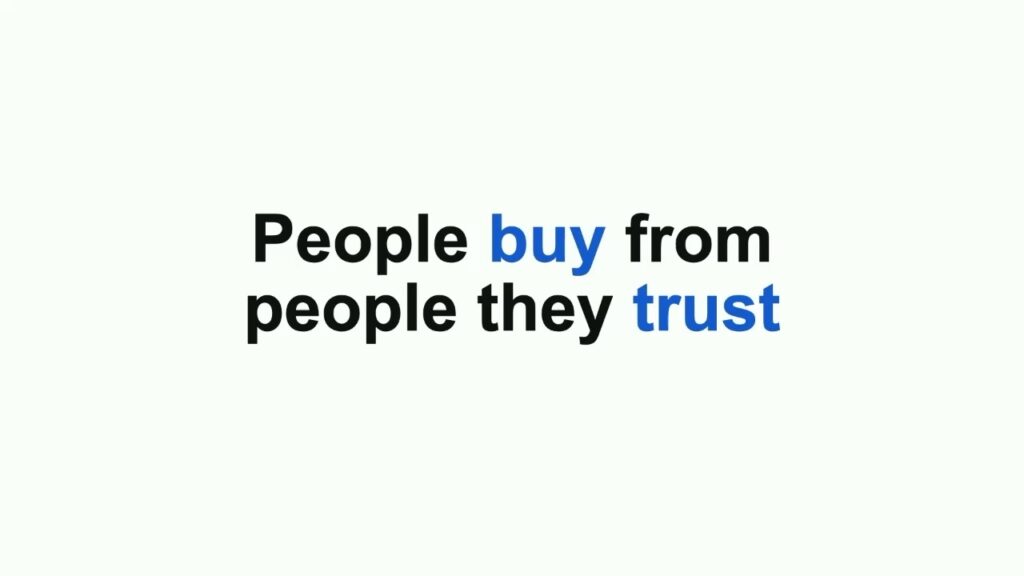
People buy from people they trust.
The Edelman Trust Barameter found that people use trust to buy or advocate for brands, to decide where they want to work, and how to invest their money, both as individuals and at an institutional level.
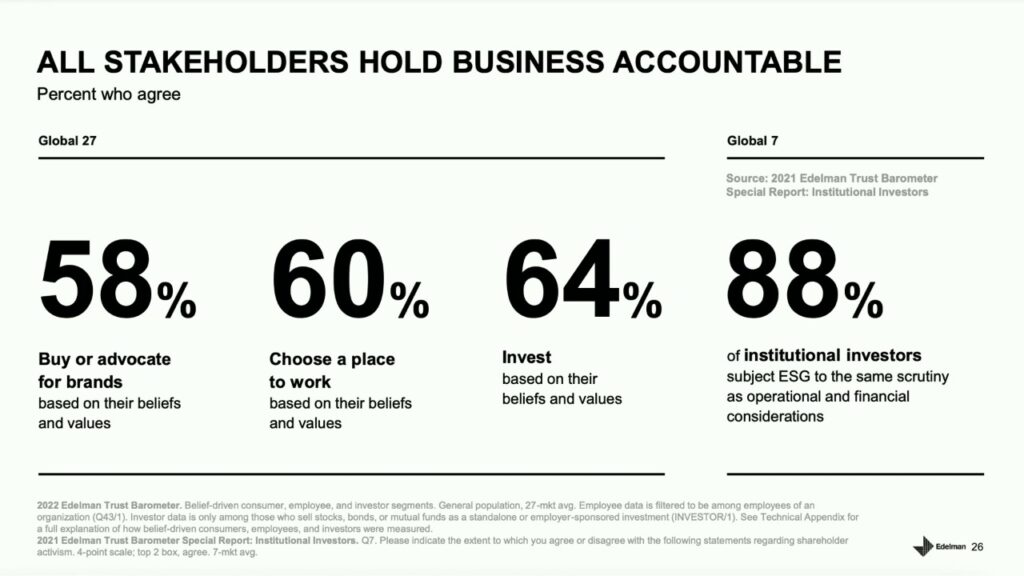
This has real bottom line consequences.
What this means is that showing the people behind the ideas, assets, and offerings builds that trust, which leads to the question,
How do we choose which people?
A couple of core questions to start with.
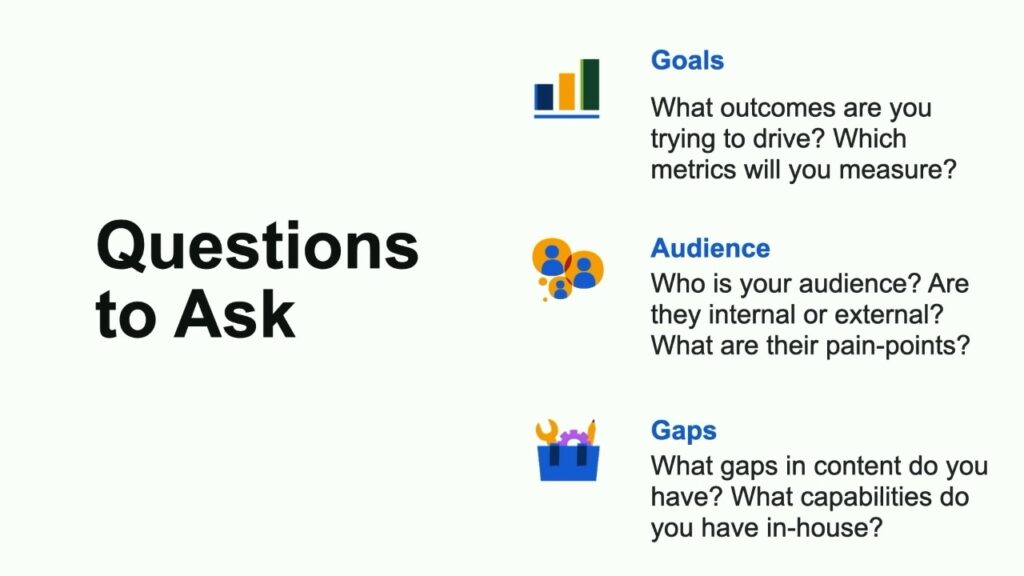
First, what are your goals?
And I know this sounds very basic, but people often want to launch an employee advocacy program, or say, “We need to build thought leaders.” What are you actually trying to drive from a metrics and a business outcome standpoint?
Next, who is your audience? Are they internal or external? What are their pain points?
And finally, gaps.
What gaps in content do you have? And what capabilities do you have in-house? Do you actually have people who are willing and able to create content, distribute it, share, and show up regularly? Or do you need to go find those skills out in the world?
Once you’ve answered these questions, that helps you start to think about what type of B2B creator you might need.
And you’re going to evaluate them on four key pillars.
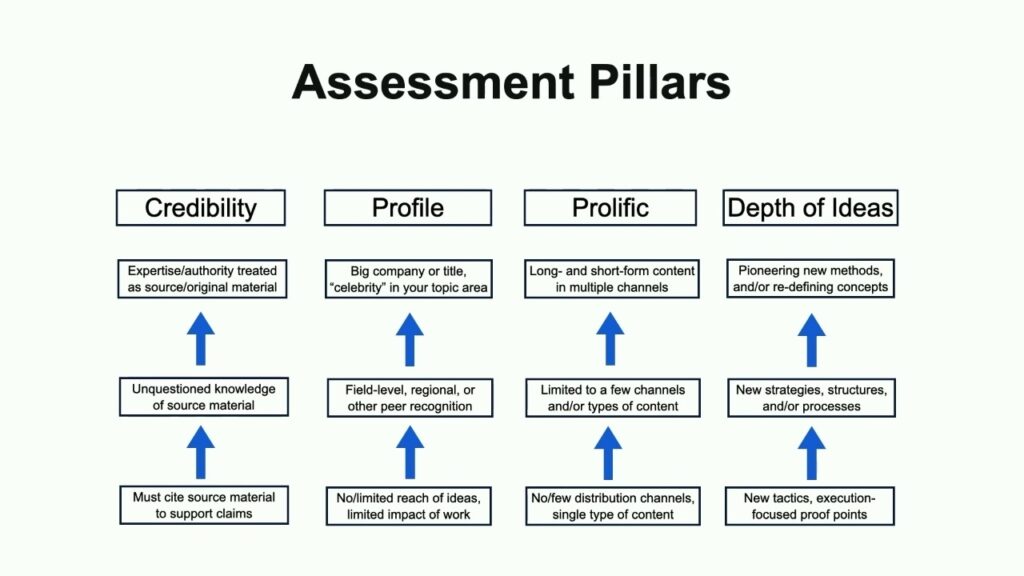
The first is “credibility.”
Do people actually believe you when you say things? You’ll start at the bottom, in most cases, and work your way up to the top. So if you have low credibility, you’re constantly asked to cite your sources and you generally have to prove that you’ve got the credentials or the experience.
Next is “profile.”
This is kind of the “fame” pillar. Do you have a large audience on LinkedIn or on YouTube? Do you have a big subscriber base in your newsletter? Are you able to land in large tier-one press outlets for your industry? Can you draw a crowd when you speak on stages?
Next is “prolific.”
Are you writing? Are you speaking? Are you on podcasts? Are you sharing on multiple social media platforms?
And my spicy comment on this: this one is 100% in your control. The other pillars have a perception challenge, it’s what other people think about you or whether they’re willing to follow you or listen to you.
How much you create and share is 100% in your control.
And then finally, “depth of ideas.”
Are you sharing new information? Are you innovating? Are you driving the conversation forward either at a tactical, strategic, or in some cases visionary level?
Depending on how you score on these pillars, you might be one of these types of creators.
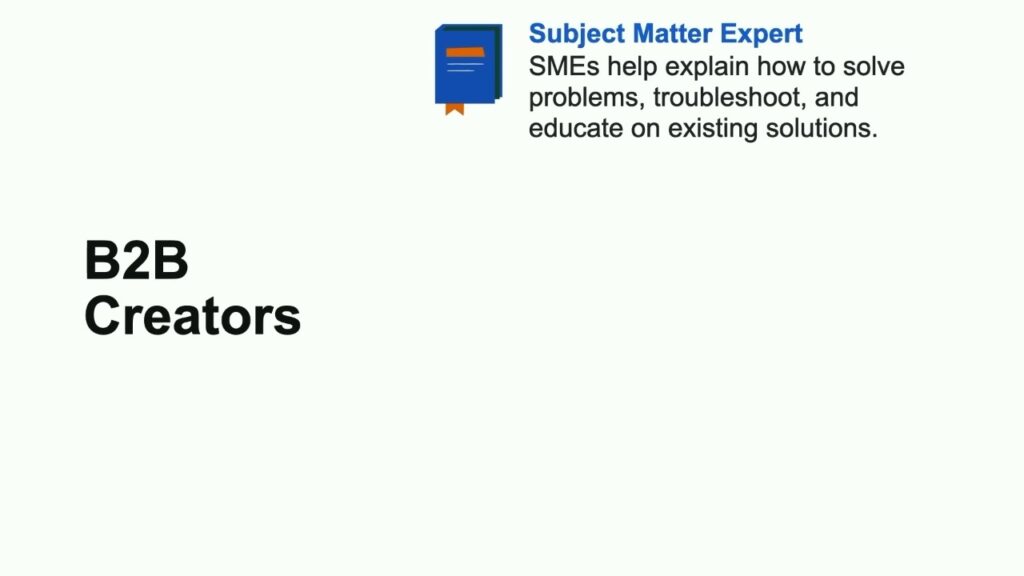
First is the “subject matter expert.”
And these folks explain and help solve existing problems using existing solutions.
And here’s how they score on the pillars. These people have high credibility because they’ve likely been in the industry for 10, 15, 20 years. They’ve got deep experience in the existing problems and solutions. And because of that deep experience, they tend to have really strong depth of ideas. They’ve seen this problem a lot. They’ve seen how the problem has evolved. And therefore they’re very good at coming up with new strategies and tactics.
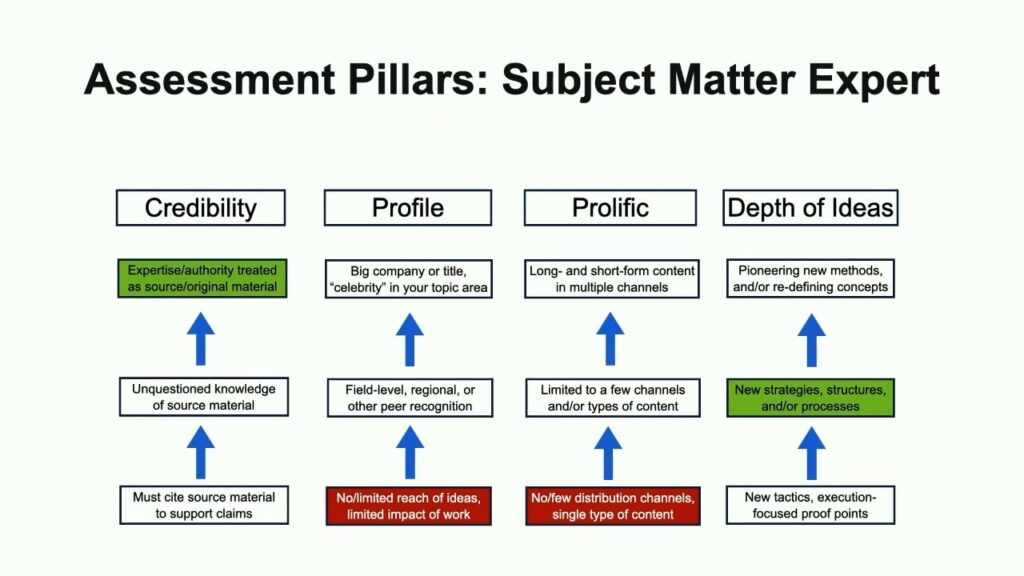
However, they tend to have a low profile, in large part, because they’re not prolific. So a lot of these folks might sit in your customer success team, your solution, engineering team, your account executive team. They’re constantly talking with customers, but they’re not really doing that externally at scale.
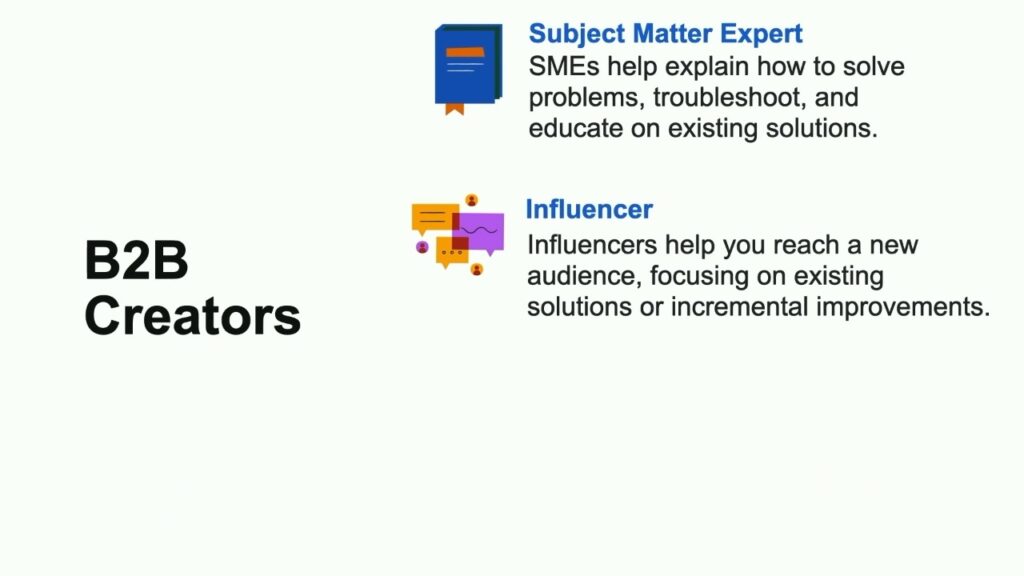
Next is “influencers.”
And influencer marketing is having a moment right now because AI LLMs love to pull from places like Reddit, podcasts, YouTube, and LinkedIn.
These folks help you reach a new audience, but they’re still focusing primarily on existing solutions or incremental improvements.
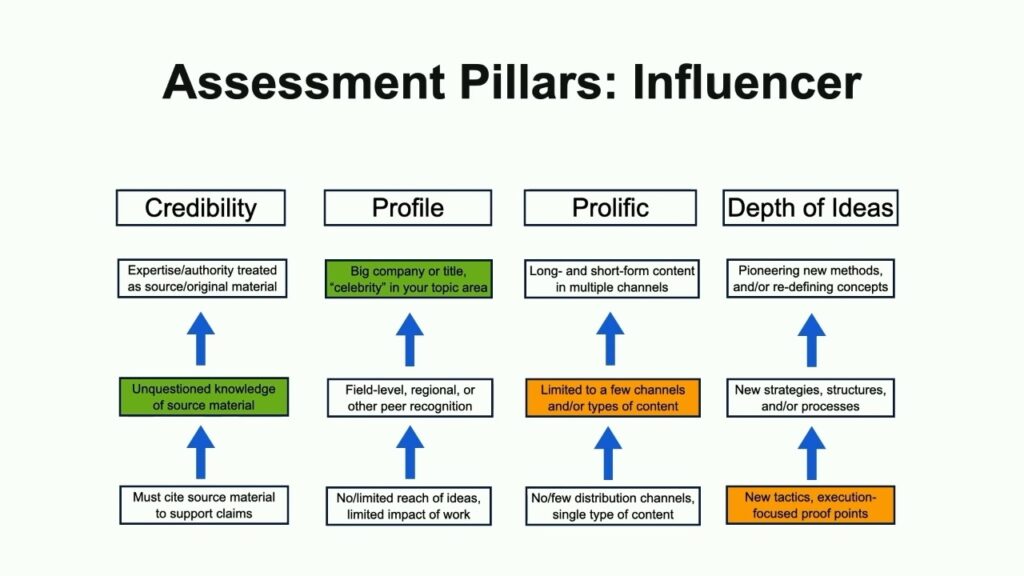
And this is their profile. They have to have some credibility, otherwise they would not have any influence, but they tend to be strongest in the profile pillar.
And in most cases, they’re only strong in one channel. So you have a LinkedIn influencer, you have an Instagram influencer, you have a YouTube influencer, right? Most of the time they’re not creating across multiple platforms. And from a depth-of-ideas perspective, sometimes they might share new tactics. They might be an early adopter of a new solution. But for the most part, they’re not driving that conversation forward and kind of inventing or innovating on those solutions.
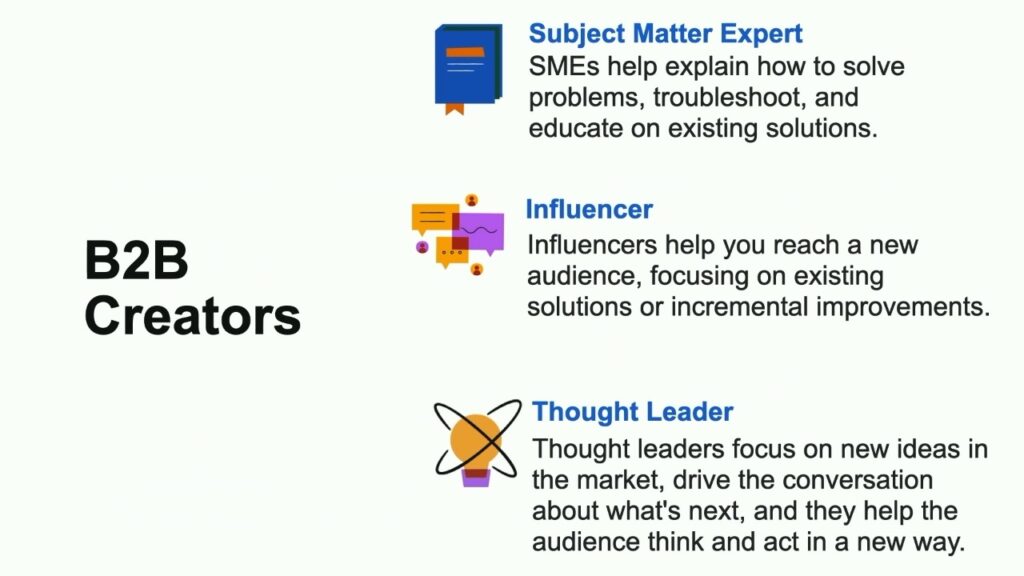
And then finally, the “thought leader.”
These people focus on new ideas in the market. They help drive the conversation forward and they help people think and act in a new direction.
And this is realistically what a thought leader looks like. Obviously it’s great if you get to the top of each of these pillars, but it’s kind of a tall order to tell someone they need to be visionary, right?
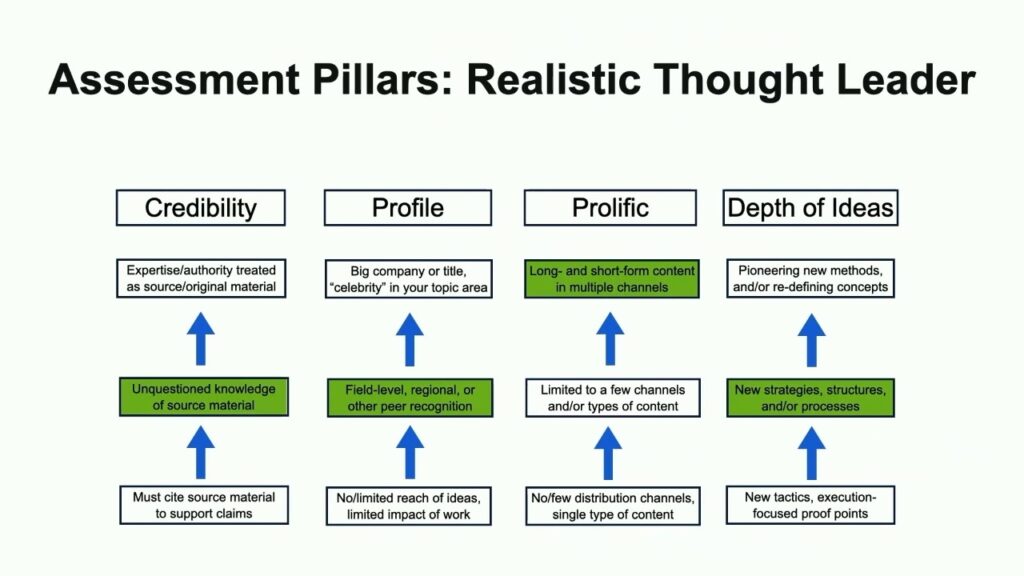
You can be a thought leader if you’ve got solid credibility, you’ve got kind of that regional or field level notoriety from a profile perspective. You do need to be very prolific in multiple channels. And then usually these folks are innovating at both the tactical and the strategic level.
Now, one question I get a lot is, “what is the BEST type of creator?”
And the answer is, it depends on your goals and it depends on your capabilities and what you’re trying to achieve.
I like this comparison of these different types of creators.
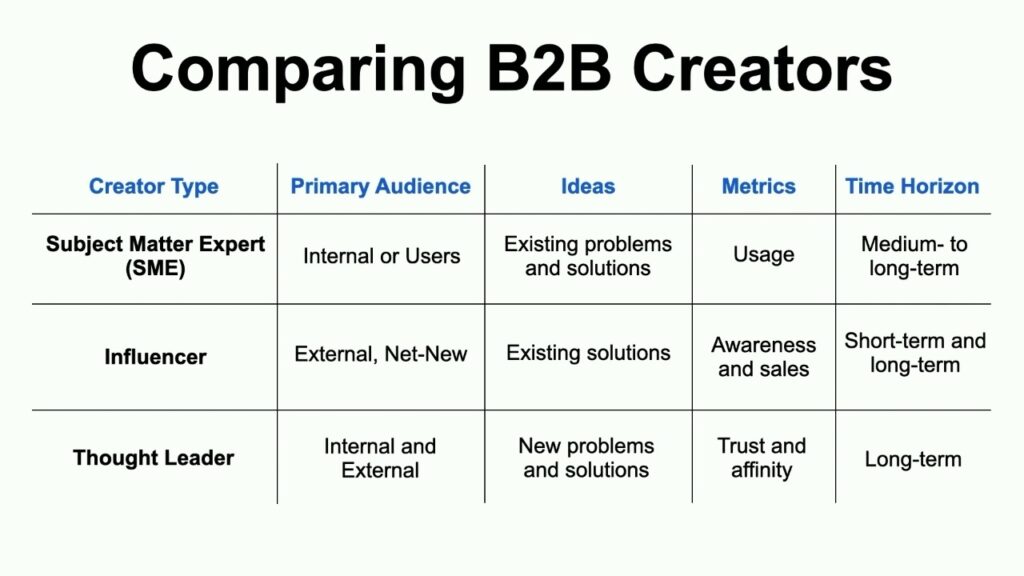
For SMEs, they can usually be focusing on internal users or the employees. They focus on existing problems and solutions, core metrics for them are things like usage or adoption metrics, and then they help to drive results in the medium-to-long term.
Influencers tend to focus on external and net-new audiences. They share about existing solutions. From a metric standpoint, they tend to be aligned to awareness and sales, and they can help drive these results over both the short term and the long term.
And then finally, your thought leaders. These folks focus on both internal and external audiences. They’re talking about new problems and solutions. Generally, their goals are aligned to the trust and affinity CTAs, and they tend to help drive long-term results.
So it does you no good to say, “we want to build a thought leader who’s going to drive pipeline tomorrow.”
There is a large gap between those two things, right?
Your subject matter experts are more likely to help you drive short-term or long-term adoption.
Your influencers are much more likely to help you drive that short-term awareness.
And then thought leadership is what’s going to really help you be positioned correctly in the future.
Published January 15, 2026
B2B Forum is packed with marketing insights, strategies, and tactics taken from the real world experience of over fifty industry experts, packaged into context you can actually put to use.
Join us in Boston for B2B Forum on November 2-4, 2026. Early buyers get B2B Forum tickets at their lowest rate, and discounted hotel rooms are available while they last.